

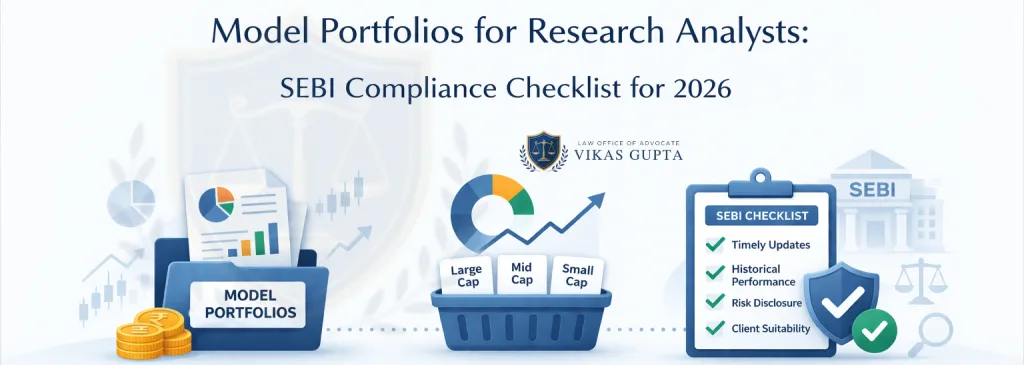
Model Portfolios for Research Analysts SEBI Compliance Checklist has become a crucial topic in 2026 as SEBI continues to tighten rules around transparency, investor protection, and advisory practices. Research Analysts (RAs) often use model portfolios to showcase investment strategies, but many fail to understand that these portfolios can fall under strict regulatory scrutiny.
A model portfolio is not just a sample or educational tool. If presented incorrectly, it can be treated as investment advice. This creates compliance risks that may lead to penalties, notices, or even suspension of registration.
In today’s environment, SEBI auditors are carefully examining how model portfolios are created, shared, and communicated to clients. This makes it essential for RAs to follow a structured compliance checklist.
Understanding how to use model portfolios correctly can help you:
- Avoid regulatory violations
- Build trust with clients
- Maintain audit readiness
- Protect your professional reputation
What Are Model Portfolios for Research Analysts?
Model portfolios are sample investment portfolios designed to demonstrate how investments can be allocated across different asset classes or securities.
They are commonly used for:
- Educational purposes
- Strategy demonstration
- Market analysis
Key Features of Model Portfolios
| Feature | Description | Importance |
|---|---|---|
| Asset Allocation | Distribution of funds | Core strategy |
| Risk Level | Conservative to aggressive | Investor suitability |
| Time Horizon | Short-term or long-term | Planning clarity |
| Performance Tracking | Historical returns | Transparency |
Why Research Analysts Use Model Portfolios
- Demonstrate Investment Strategies
Model portfolios help explain how different assets work together in a structured plan. - Simplify Complex Concepts
Investors find it easier to understand practical examples rather than theoretical explanations. - Build Credibility
Well-structured portfolios showcase expertise and analytical capability.
However, improper use can lead to compliance issues.
SEBI’s View on Model Portfolios
SEBI does not restrict model portfolios, but it strictly regulates how they are presented and used.
Key Principle
👉 If a model portfolio influences investment decisions, it may be treated as advice.
This means:
- You must follow disclosure rules
- You must avoid misleading representation
- You must ensure proper documentation
To understand SEBI’s regulatory approach, read: What is the Role of SEBI in Regulating Market Behavior
When Model Portfolios Become Regulated Advice
Situations That Trigger SEBI Regulation
| Scenario | Why It Becomes Advice | Risk Level |
|---|---|---|
| Personalized Portfolio | Matches client profile | High |
| Direct Recommendations | Suggests specific actions | High |
| Paid Access | Charging for portfolio access | High |
| Performance Claims | Promises returns | Critical |
Key Risk Indicators
- Personalization of Portfolios
If the portfolio is tailored to a specific client, it becomes regulated advisory activity. - Actionable Recommendations
Statements like “buy this stock” or “allocate 20% here” are treated as advice. - Monetization of Content
Charging fees for accessing model portfolios increases compliance responsibility.
SEBI Compliance Checklist for Model Portfolios
Core Compliance Requirements
| Requirement | What You Must Do |
|---|---|
| Disclosure | Clearly state purpose |
| Non-Personalization | Avoid client-specific advice |
| Documentation | Maintain records |
| Risk Explanation | Highlight risks |
| Transparency | Avoid misleading claims |
Practical Compliance Steps
- Provide Clear Disclaimers
Always mention that the portfolio is for informational purposes only. - Avoid Direct Instructions
Use general explanations instead of specific buy/sell advice. - Maintain Records
Keep documentation of how the portfolio was created. - Update Regularly
Ensure portfolios reflect current market conditions.
Common Mistakes Research Analysts Make
Mistakes to Avoid
- Treating Model Portfolios as Marketing Tools
Using portfolios to attract clients without proper disclaimers can lead to violations. - Showing Unrealistic Returns
Highlighting only positive performance creates misleading impressions. - Lack of Proper Documentation
Failing to maintain records can result in audit failure. - Ignoring SEBI Guidelines
Not updating practices as per new regulations increases risk.
Read more here: 10 Common Mistakes That Can Get Your SEBI Registration Cancelled
Risk of Misleading Performance Representation
Why This Is Important
Performance data must always be accurate, complete, and transparent. Any form of selective or exaggerated presentation can mislead investors and lead to serious SEBI compliance issues.
Common Issues in Performance Representation
| Issue | Explanation | Impact |
|---|---|---|
| Selective Data | Showing only profitable trades or positive returns while hiding losses | Creates a misleading picture of performance |
| No Risk Disclosure | Not explaining the risks associated with the portfolio or strategy | Leads to investor confusion and wrong expectations |
| Overstated Returns | Presenting unrealistic or exaggerated returns without proper basis | Results in regulatory violations and penalties |
Best Practices for Proper Representation
| Practice | What You Should Do | Benefit |
|---|---|---|
| Show Both Gains and Losses | Present complete performance data including negative outcomes | Builds transparency and trust |
| Use Realistic Scenarios | Base projections on practical assumptions, not ideal conditions | Avoids misleading investors |
| Clearly Mention Assumptions | Explain how returns are calculated and what factors are considered | Improves clarity and compliance |
Documentation Requirements for Model Portfolios
Proper documentation is essential for SEBI compliance when using model portfolios. It is not enough to create and share portfolios; you must also maintain clear and verifiable records that explain how those portfolios were developed and presented. During SEBI audits, documentation acts as proof that your practices are transparent, structured, and compliant with regulations.
Documents You Must Maintain
- Portfolio Creation Methodology
You must clearly document how the model portfolio was created. This includes the strategy used, the logic behind asset allocation, and the criteria for selecting securities. Having a defined methodology shows that your recommendations are based on structured analysis rather than random selection. - Data Sources Used
It is important to record where your data comes from, such as market research reports, financial statements, or trusted databases. Reliable data sources strengthen the credibility of your portfolio and help justify your decisions during audits. - Assumptions and Calculations
Every model portfolio is based on certain assumptions, such as expected returns, risk levels, or market conditions. These assumptions must be documented along with the calculations used. This helps explain the reasoning behind your strategy and ensures transparency. - Performance Tracking Records
You must maintain records of how the portfolio has performed over time. This includes both positive and negative results. Showing complete performance data helps avoid accusations of misleading investors.
Importance of Documentation
- Supports the Audit Process
During a SEBI audit, documentation is the first thing regulators check. Proper records make it easier to respond to queries and demonstrate compliance without confusion or delay. - Proves Regulatory Compliance
Documentation serves as evidence that your model portfolios follow SEBI guidelines. Without proper records, even compliant practices may appear suspicious. - Reduces Legal and Regulatory Risk
Well-maintained documentation protects you in case of disputes, complaints, or regulatory action. It shows that your advisory process is transparent and professionally managed. - Improves Internal Control and Consistency
Maintaining structured documentation helps standardize your processes. This ensures that all portfolios follow a consistent approach, reducing errors and improving overall quality.
SEBI Audit Focus on Model Portfolios
What Auditors Check
| Area | What Is Verified |
|---|---|
| Disclosures | Clarity and completeness |
| Records | Proper documentation |
| Communication | Client interaction |
| Compliance | Adherence to rules |
Audit Preparation Tips
- Maintain updated records
- Ensure transparency
- Keep audit trail ready
Role of Lawyer Vikas Gupta in SEBI Compliance
SEBI rules are complex and constantly evolving. Even small mistakes can lead to penalties.
How Lawyer Vikas Gupta Helps
Compliance Structuring : Helps design legally compliant model portfolios.
Documentation Support : Ensures all records meet SEBI standards.
Legal Protection : Handles notices and prevents penalties.
Advisory Services : Guides you on presenting model portfolios correctly so they remain compliant and do not trigger regulatory violations.
Explore services here: SEBI Legal Advisory Services
Advanced Strategy for Using Model Portfolios Safely
Structured Approach
| Step | Action |
|---|---|
| Step 1 | Define purpose clearly |
| Step 2 | Avoid personalization |
| Step 3 | Maintain documentation |
| Step 4 | Disclose risks |
Strategic Insights
- Use portfolios for education, not advice
- Maintain transparency
- Regularly review compliance
Digital Use of Model Portfolios
Many Research Analysts today share model portfolios through digital platforms such as websites, mobile apps, social media channels, email newsletters, and subscription-based communities. While this helps in reaching a wider audience and building visibility, it also increases compliance responsibility under SEBI regulations. Digital platforms make it difficult to control how content is interpreted, which is why careful handling is essential.
Risks in Digital Platforms
- Misinterpretation by Users
When model portfolios are shared online, users may misunderstand them as direct investment advice rather than educational examples. Since digital content reaches a wide and diverse audience, many investors may act on these portfolios without understanding their context, leading to potential compliance issues. - Lack of Control Over Audience
Unlike one-on-one advisory services, digital platforms do not allow you to control who accesses your content. A portfolio designed for a specific risk level may be viewed by investors with completely different financial profiles, increasing the risk of unsuitable investment decisions. - Increased Compliance Scrutiny
SEBI actively monitors digital platforms to identify unregistered advisory activities or misleading financial content. Sharing model portfolios online without proper structure and disclosures can attract regulatory attention and increase the chances of audits or notices.
Safe Practices for Digital Use
- Add Clear Disclaimers
Every model portfolio shared online must include a clear disclaimer stating that it is for informational or educational purposes only. This helps reduce the risk of it being treated as personalized investment advice. - Avoid Actionable Language
Using direct instructions such as “buy this stock” or “allocate funds here” can convert a model portfolio into regulated advice. Instead, portfolios should be presented in a general and explanatory manner. - Maintain Proper Records
It is important to keep records of all digital content shared, including dates, platforms, and versions. This ensures that you can provide proof of compliance if required during a SEBI audit. - Ensure Consistency Across Platforms
The information shared on different platforms should be consistent and aligned with your official documentation. Any mismatch can raise red flags during compliance checks.
Future of SEBI Compliance for Research Analysts
Expected Trends
| Trend | Impact |
|---|---|
| Stricter audits | More compliance |
| Digital monitoring | Increased transparency |
| Higher penalties | Greater accountability |
Use Model Portfolios Carefully
Model portfolios are powerful tools for Research Analysts (RAs), but they must be handled with care. While they help in explaining strategies and showcasing expertise, improper use can quickly turn them into regulated advisory activity under SEBI rules. This makes it essential to balance their use with strict compliance.
If You Ignore SEBI Compliance
- Risk of Financial Penalties
If model portfolios are presented without proper disclosures or used as indirect advice, SEBI may impose monetary penalties. Even small mistakes in communication or documentation can lead to fines that affect your business profitability. - Risk of License Suspension or Cancellation
Continuous non-compliance or serious violations can lead to suspension or cancellation of your SEBI registration. This can immediately stop your ability to operate as a Research Analyst and damage your professional career. - Increased Regulatory Scrutiny
Once a compliance issue is identified, SEBI may subject your business to more frequent audits and monitoring. This increases operational pressure and makes it harder to run your advisory services smoothly.
If You Follow SEBI Rules Properly
- Builds Strong Client Trust
When model portfolios are presented transparently with proper disclosures, clients feel more confident in your services. Trust plays a major role in long-term client relationships. - Supports Sustainable Business Growth
Compliance creates a stable foundation for your advisory business. It allows you to scale operations, onboard more clients, and expand services without fear of regulatory action. - Improves Professional Credibility
Following SEBI guidelines enhances your reputation as a responsible and compliant advisor. This can differentiate you from competitors in a crowded market.
Why Expert Guidance Is Important
- Helps Avoid Costly Mistakes
Legal experts can identify compliance gaps early and prevent issues before they turn into serious problems. - Keeps You Updated with SEBI Regulations
SEBI rules are constantly evolving, especially in areas like digital advisory and model portfolios. Professional guidance ensures you stay updated. - Provides Strong Legal Protection
Proper structuring, documentation, and advisory support reduce the risk of penalties and legal action.
👉 Advocate Lawyer Vikas Gupta helps you stay compliant, avoid risks, and build a legally secure advisory practice by guiding you through SEBI regulations at every step.
Learn more here: Lawyer Vikas Gupta Official Website
FAQs
What are model portfolios in research analysis?
They are sample portfolios used to demonstrate investment strategies.
Are model portfolios regulated by SEBI?
Yes, if they influence investment decisions.
Can I charge for model portfolios?
Yes, but compliance requirements increase.
What is the biggest risk?
Misleading or personalized advice.
Do I need disclaimers?
Yes, they are essential.
How can Lawyer Vikas Gupta help?
He ensures compliance and legal protection.
Are digital portfolios risky?
Yes, if not properly managed.
How to stay compliant?
Follow SEBI rules and maintain documentation.