

Have you ever wondered what happens when someone breaks the rules in the stock market? 📉 SEBI (Securities and Exchange Board of India) is the big boss that watches over everything to keep it fair. If someone does something wrong, SEBI starts a special process called “Adjudication.” And guess what? If you’re in trouble, Advocate Vikas Gupta is here to help you! He is one of the top SEBI lawyers in Delhi.
What is SEBI Adjudication?
Adjudication is a process where SEBI checks if someone broke the rules and then decides if a fine or penalty is needed. It is like when a teacher finds out who cheated in class and gives punishment.
This process is important because it helps to make the stock market safe and clean. SEBI follows a proper legal method before punishing anyone.
Why SEBI Adjudicates?
- When someone gives false information
- If someone cheats small investors
- When rules about trading are broken
- Giving stock advice without SEBI registration
If any of these happen, SEBI will act. And the person may get a Show Cause Notice (SCN).
Who Starts the Adjudication Process?
SEBI appoints a person called the “Adjudicating Officer.” This person checks all the facts and then makes a fair decision. This officer acts like a judge and has powers given by the SEBI Act, 1992.
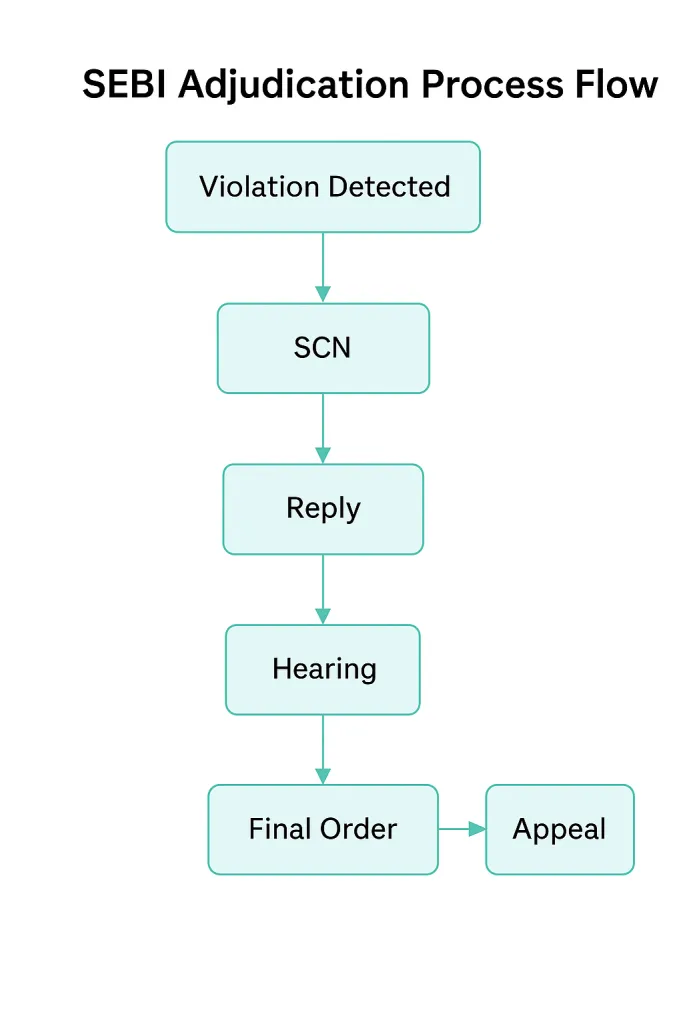
Step-by-Step SEBI Adjudication Process
| Step | Description |
|---|---|
| 1. Detection of Violation | SEBI finds out someone may have broken the rules. |
| 2. Investigation | SEBI checks all documents, emails, calls, trades, and other data. |
| 3. Issue of Show Cause Notice (SCN) | The person receives a notice asking them to explain why they broke rules. |
| 4. Reply to Notice | The person can reply with help from a SEBI lawyer like Lawyer Vikas Gupta. |
| 5. Personal Hearing | They may be asked to appear before SEBI and explain their side. |
| 6. Final Order | The Adjudicating Officer decides if the person is guilty and what penalty to give. |
SEBI Adjudication Process Flow
Adjudication vs Prosecution: Key Differences
| Legal Basis | Penalty Type | Authority | Timeframe | Appeal Path |
|---|---|---|---|---|
| SEBI Act, 1992 (Section 15) | Monetary Penalty | SEBI Adjudicating Officer | 4–12 Months | Securities Appellate Tribunal (SAT) |
| SEBI Act, 1992 (Section 24) | Criminal Penalty (Jail/Fine) | Court via SEBI Complaint | 12+ Months | Judicial Court Process |
What Penalties Can SEBI Give?
SEBI can give different types of punishments like:
- Monetary Penalties (big fines 💰)
- Cancel your SEBI registration
- Ban from the stock market
- Freezing of bank or demat accounts
Learn about when SEBI cancels registration here.
How Lawyer Vikas Gupta Helps in SEBI Adjudication
Lawyer Vikas Gupta is a trusted name for SEBI-related matters. He helps you from the start till the end of the adjudication process. Here’s how:
- Drafting professional replies to Show Cause Notices
- Representing you in SEBI personal hearings
- Helping you avoid high penalties or cancellations
- Advising you on SEBI compliance
Many clients have received relief with his expert services. He knows SEBI’s rules and how to handle their process smoothly.
Common Mistakes That Lead to SEBI Adjudication
- Running a paid stock advisory without registration
- Not submitting monthly compliance reports
- Failure in client recordkeeping
- Breaking the SEBI Code of Conduct
- Not doing proper risk profiling
Read more in Top SEBI Violations blog.
What is a Show Cause Notice?
This is the first step in the process. SEBI sends this notice when it thinks you broke a rule. It gives you a chance to tell your side.
Responding wrongly can make things worse. Read this guide or contact Lawyer Vikas Gupta to draft your reply the right way.
Is There a Way to Avoid SEBI Adjudication?
Yes! You can follow all the SEBI rules from the start. Here are some helpful reads:
Time Limit for SEBI Adjudication
The process usually takes 4 to 12 months. But it can be faster or slower depending on the case. You can learn about timelines here: SEBI Timeline.
Can You Appeal Against SEBI’s Final Order?
Yes, you can. If you don’t agree with SEBI’s order, you can go to the Securities Appellate Tribunal (SAT) within 45 days.
Again, Lawyer Vikas Gupta can guide you through the appeal process.
SEBI Laws Used During Adjudication
- SEBI Act, 1992
- Securities Contracts Regulation Act, 1956
- Depositories Act, 1996
- Various SEBI regulations (like IA Regulations, RA Regulations)
Adjudication vs Prosecution – What’s the Difference?
Adjudication means SEBI gives penalties (mostly monetary). Prosecution means SEBI takes criminal action and goes to court. Adjudication is faster and handled by SEBI officers. Prosecution is more serious.
Get Help from Delhi’s Top SEBI Lawyer
Advocate Vikas Gupta offers end-to-end support for SEBI issues including adjudication, compliance, audits, and appeals. Whether you are an Investment Advisor or Research Analyst, he ensures you get the right legal help at every stage.
With decades of experience and numerous successful cases, he is your best choice in India. For assistance, visit our contact page.
FAQs
What is SEBI adjudication?
It is the process SEBI uses to decide penalties for people or firms who break market rules.
What happens after a SEBI Show Cause Notice?
You must reply within a given time. A lawyer like Vikas Gupta can help you draft your response.
Can I skip the SEBI personal hearing?
It’s not advised. Skipping can lead to harsher penalties. Always attend or send a legal representative.
What is the penalty in SEBI adjudication?
It can be a fine, suspension, cancellation of registration, or market ban.
How can Lawyer Vikas Gupta help me?
He can reply to your SEBI notices, represent you in hearings, and help reduce or cancel penalties.
What is the deadline to appeal a SEBI order?
You must appeal to SAT within 45 days of the SEBI order.
What is the difference between adjudication and prosecution?
Adjudication is handled by SEBI and involves penalties. Prosecution means SEBI takes you to court for serious offenses.
Can companies face SEBI adjudication?
Yes, SEBI can take action against firms, not just individuals. Learn more here.